Orangery maintenance: How to look after a timber orangery year after year
Orangery maintenance is important. Your timber orangery is a long-term investment. Treat it well and it will reward you with decades of usable, beautiful space. Neglect the basics and small problems like a cracked seal, a blocked gutter or peeling paintwork and they’ll soon become expensive ones. The good news: maintaining a hardwood orangery is straightforward. Clean the frames and glass regularly, restain or repaint every two to four years, inspect seals twice a year, keep the roof lantern clear of debris, and clear gutters in spring and autumn. That is the short answer. Below is everything you need to know to do it properly.
How often does a timber orangery need maintenance?
Timber needs more attention than uPVC, but far less than most people expect. Industry guidance suggests repainting or restaining hardwood frames every two to four years, depending on exposure and the finish applied. Glass should be cleaned every three to six months. Seals, gutters, and the roof lantern warrant a proper check twice a year once in spring and once in autumn.
Clean your orangery regularly
Dirty frames and glass do more damage than they appear to. Grime traps moisture against timber, and standing water accelerates any weaknesses in the finish.
For the frames, wipe them down monthly with a damp cloth and a mild detergent. Avoid abrasive cleaners or anything solvent-based that could lift the stain or paint. For the glass, including the roof lantern panels, work top to bottom so dirty water does not streak areas you have already cleaned. Use warm water, a small amount of washing-up liquid, and a soft sponge or microfibre cloth. A telescopic-handled brush lets you reach the roof panels safely from the ground without having to stand on any surface not designed to bear weight.
If your roof lantern has self-cleaning glass fitted, check the manufacturer’s guidance, some coatings should never be cleaned with abrasive materials or squeegees.
Inspect seals and frames often, and make repairs promptly

Seals around doors and windows are your orangery’s first line of defence against water ingress. Check them at least every few months. Look for gaps, cracking, or areas where the seal has pulled away from the frame. Any of these will allow damp to get in behind the timber, which can cause swelling and, over time, rot.
If you spot early damage, act on it quickly. Replacing a section of sealant costs very little. Repairing water-damaged timber costs considerably more. While you are checking seals, run your eye along the frames for any signs of peeling paint, cracking, or discolouration, these signal that the protective finish is breaking down and that a repaint is overdue.
Maintain the glazing
Glass that looks cloudy or streaked is not just a cosmetic issue. A dirty roof lantern reduces the amount of natural light that reaches your space, one of the main reasons people choose a timber orangery in the first place.
Never use a jet washer on glazed panels. High-pressure water can blow the hermetic seals on double-glazed units, causing condensation between the panes that cannot be reversed without replacing the unit. Instead, use low pressure, a garden hose on a gentle setting is fine for rinsing after washing.
For the vertical side glass, a standard window cleaner applied to a cloth (rather than sprayed directly at the frame seal) is all you need. Inspect each pane for chips or micro-cracks during cleaning. A small chip that sits in a corner seal can spread under temperature changes, particularly through winter.
Take care of the roof and gutters
Blocked gutters are the single most common cause of water damage in orangeries and extensions. Leaves and debris gather fast, particularly in autumn, and standing water in a gutter has nowhere to go except into the structure. Clean your gutters at least twice a year, spring and autumn are the natural points to do it.
When clearing gutters, also check downpipes for blockages. A downpipe that drains slowly will overflow during heavy rain, directing water onto the flat roof and perimeter of your orangery. While you are up there, look at the flashing where the orangery meets the main house wall. This junction is a common weak point; any gaps here should be resealed with appropriate materials before water finds its way through.
Trimming back any nearby trees reduces how quickly debris collects on the roof and in the gutters, cutting down your maintenance time over the course of a year.
Repainting and restaining: protecting the timber long term
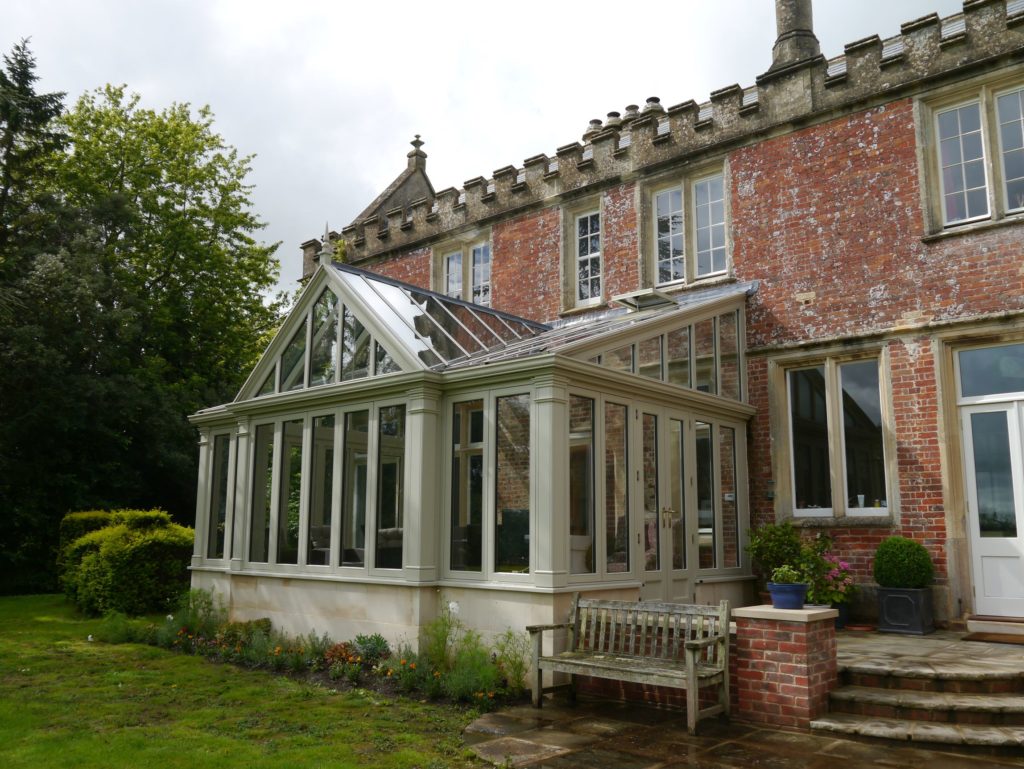
This is the task homeowners tend to put off, and the one that matters most for a wooden orangery’s lifespan. Timber that is not properly protected will absorb water, swell, and eventually split or rot. A well-applied finish prevents that.
The right interval depends on your orangery’s orientation, how much direct sun and rain it receives, and the original finish. South- or west-facing structures in exposed positions may need attention at the two-year mark. More sheltered installations with a quality factory-applied primer and topcoat can go to four years.
When repainting:
- Clean the surface thoroughly and allow it to dry completely before applying any product
- Sand back any areas of peeling paint to a sound edge
- Use an oil-based or microporous paint formulated for exterior hardwood, these allow the timber to breathe while keeping water out
- Pay particular attention to end grains, joints, and any areas where two pieces of timber meet, as these are where moisture gets in first
If your orangery was factory-finished (as all Orangeries UK structures are, with primer, stains, and paint applied before installation), the original finish will provide a strong base. Maintenance repaints are generally lighter work than a full strip and refinish.
How long will a timber orangery last with proper care?
A well-maintained hardwood orangery should last several decades. The quality of the original timber and finish plays a large part, this is why the choice of supplier matters. Orangeries UK manufactures from high-quality, environmentally sourced hardwoods, treats every structure before installation, and provides aftercare support from a team of specialists.
If you are considering a new build or want advice on maintaining an existing structure, get in touch with the team or call 0333 335 5051 for a no-obligation conversation.