Orangery Lighting Ideas: Getting the Perfect Day-to-Night Atmosphere
When you invest in a beautiful new orangery, you’re creating a versatile room that deserves just as much thought and planning as any other area of your property. And here’s something many homeowners overlook; orangery lighting ideas are essential to making your space work brilliantly, whether you’re enjoying your morning coffee in the sunshine or entertaining guests in the evening.
The right lighting design can completely transform how your orangery looks and feels throughout the day. It’s the difference between a room that feels cold and uninviting after sunset, and one that glows with warmth and ambience no matter what time you’re using it. In this blog, we’ll walk you through everything you need to know about creating the perfect day-to-night lighting scheme for your orangery.
Why Lighting Design Matters in Your Orangery
Before we look into specific lighting solutions, let’s talk about why getting this right is so important.
Your orangery is fundamentally different from a standard extension. With its abundance of glazing, whether that’s through wall windows, glass roof panels, or a stunning roof lantern, it’s flooded with natural daylight during the day. This is brilliant. But come evening time, all that glass can make the space feel exposed and rather dark if you haven’t planned your artificial lighting carefully.
The challenge is creating a lighting scheme that:
- Works harmoniously with the natural light during daytime
- Provides adequate functional illumination for evening use
- Creates an inviting, warm ambience for entertaining
- Allows you to adjust the mood from bright and energetic to soft and relaxing
- Complements the architectural style of your orangery
Getting your orangery lighting design right means you’ll use the space more throughout the year, which significantly increases the value of your investment.
Understanding Your Orangery’s Lighting Needs

Every orangery is different, so before you start shopping for light fittings, it’s worth thinking about how you’ll use the space.
Are you planning to use it as:
- A dining area for family meals and entertaining?
- A lounge or relaxation space?
- A home office or study?
- A hybrid space that does a bit of everything?
The way you use your orangery will influence your lighting choices significantly. A dining orangery, for instance, benefits from different lighting strategies than one designed primarily as a sitting room.
You should also consider the orientation of your orangery. A south-facing orangery receives more intense, direct sunlight throughout the day compared to a north-facing one. This affects both how bright your space is naturally and how much glare you might experience.
Ceiling Spots: The Foundation of Your Lighting Scheme
When it comes to practical, flexible lighting for orangeries, ceiling spotlights are brilliant. They’re one of the most popular choices we see homeowners installing, and there’s good reason for that.
Why Ceiling Spots Work So Well
Ceiling spots, sometimes called downlighters or recessed ceiling lights, offer several advantages in an orangery setting:
Discreet Design: Recessed ceiling lights sit flush with your ceiling, so they don’t intrude on the clean lines of your orangery space. This is particularly important if you’ve invested in a contemporary orangery design.
Even Illumination: Well-positioned ceiling spotlights provide consistent, functional lighting across your entire orangery. You’re not relying on pools of light from individual sources; instead, you get comprehensive coverage.
Flexibility: Modern ceiling spots come with dimmable options, allowing you to adjust brightness levels depending on the time of day and your needs.
Installing Ceiling Spots in Flat Roofs
If your orangery features a flat roof (rather than a pitched or lantern roof), ceiling spots are particularly straightforward to install. Your installer can position them across the roof surface in a grid pattern, ensuring even light distribution.
Pro tip: Aim for spacing of roughly 1.2 to 1.5 metres between spotlights. This creates overlapping pools of light that blend together, rather than creating noticeable gaps or overly bright patches.
The number of ceiling spots you’ll need depends on:
- The size of your orangery
- The colour of your ceiling (darker ceilings absorb more light)
- Whether you want dramatic accent lighting or functional fill light
- Your personal preference for brightness levels
Ceiling Spots and Roof Lanterns
If your orangery features a roof lantern, ceiling spots still play an important role. During the day, they might not be needed. But in the evening, they become essential for maintaining the ambience and functionality of your space.
The beauty of a roof lantern is that it brings beautiful natural light into the centre of your orangery during daylight hours. Your ceiling spotlights can then focus on illuminating the walls and edges of the room, creating balanced lighting that doesn’t compete with the lantern itself.
Pendant Lights: Adding Character and Focus
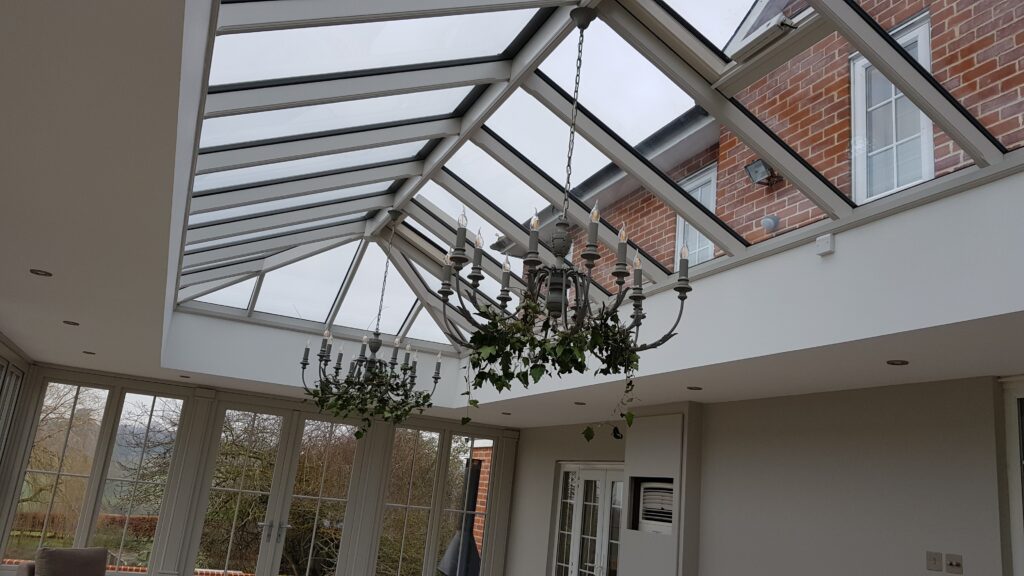
While ceiling spots provide the essential functional lighting, pendant lights add character, visual interest, and a sense of purposeful design to your orangery.
What Are Pendant Lights?
Pendant lights are individual fixtures that hang from the ceiling, suspended by a chain, cord, or rod. They create a focal point and are particularly effective over dining tables, kitchen islands, or seating areas within your orangery.
Why Pendant Lights Work in Orangeries
Pendant lights offer several distinct advantages for orangery lighting design:
Creating a Focal Point: A well-chosen pendant or cluster of pendants draws the eye and creates a sense of intentional design. They work particularly well over dining tables, helping to define the space and create an intimate atmosphere.
Adjustable Light Levels: Like ceiling spots, modern pendant lights can be dimmable, allowing you to adjust the ambience from bright and social to soft and relaxing.
Style and Personality: Pendant lights come in hundreds of designs from minimalist modern to traditional styles. Choosing the right pendants helps your orangery reflect your personal taste and complements your home’s architecture.
Layered Lighting: Using pendant lights alongside ceiling spots and other lighting sources creates what designers call “layered lighting.” This is the secret to achieving that perfect day-to-night atmosphere.
Choosing the Right Pendant Styles
Your pendant light choices should complement your orangery’s architecture. A contemporary orangery with clean lines and minimalist styling benefits from sleek, geometric pendant designs. A more traditional orangery might suit classic bell-shaped pendants or vintage-inspired designs.
Wall Lights: Layering Your Lighting Scheme
Wall-mounted lights add another dimension to your orangery lighting ideas and are brilliant for creating ambience and balance.
The Role of Wall Lights in Orangery Design
Wall lights serve multiple purposes in an orangery:
Creating Ambience: Wall lights create a soft, diffused glow that bounces off your ceiling, making the space feel larger and more inviting. This is particularly effective in the evening.
Adding Layers: By combining wall lights with ceiling spots and pendant lights, you create a more sophisticated lighting scheme that can be adjusted to suit different moods and occasions.
Highlighting Features: Wall lights can be positioned to graze walls, highlighting textures, artwork, or architectural features of your orangery.
Task Lighting: Downward-facing wall lights provide practical illumination for reading or working, without the overhead glare of ceiling spots.
As you can see, there are several lighting options available for your orangery. If you’d like to find out more contact Orangeries UK today. You can call us on 01296 714 314 or contact us online.